Characteristics of abyssal plain

Natalie Ross
Published Feb 18, 2026
How would you describe the abyssal plain?
An abyssal plain is an underwater plain on the deep ocean floor, usually found at depths between 3,000 metres (9,800 ft) and 6,000 metres (20,000 ft). The creation of the abyssal plain is the result of the spreading of the seafloor (plate tectonics) and the melting of the lower oceanic crust.What are abyssal plains how are abyssal plains formed?
How are abyssal plains formed? Abyssal plains are deep, extremely flat features of the ocean floor. They are formed as sediments from coastal regions are transported far out to sea and settle to the ocean floor, and as materials from the water column above settle to the bottom.Is the abyssal plain flat?
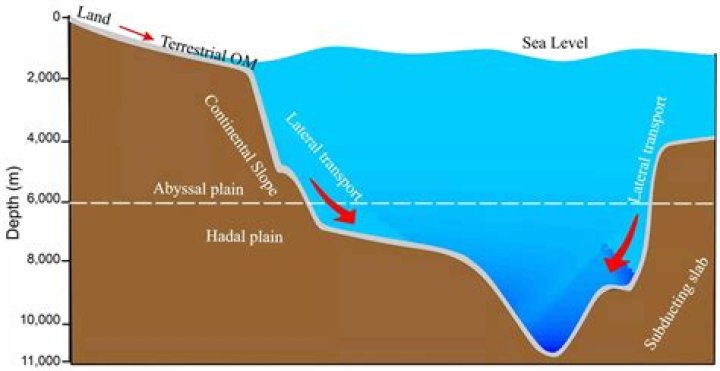
Abyssal PlainsThe term ‘abyssal plain‘ refers to a flat region of the ocean floor, usually at the base of a continental rise, where slope is less than 1:1000. It represents the deepest and flat part of the ocean floor lying between 4000 and 6500 m deep in the U.S. Atlantic Margin.
What is the abyssal plain made out of?
Abyssal plains occur at depths greater than 6,500 ft (2,000 m) below sea level and are underlain by oceanic crust composed primarily of basalt, a dark colored volcanic rock rich in iron- and magnesium-silicate minerals.What lives on the abyssal plain?
Animals that commonly occur in abyssal sediments include molluscs, worms (nematodes, sipunculids, polychaetes, hemichordates and vestimentiferans) and echinoderms (holothuroids, asteroids, ophiuroids, echinoids, and crinoids).How deep is abyssal plain?
At depths of over 10,000 feet and covering 70% of the ocean floor, abyssal plains are the largest habitat on earth.Where is the biggest abyssal plain?
The largest single recognized abyssal plain is the Sohm Plain in the North Atlantic, which covers around 900,000 km² of ocean floor.What animals live in the abyssal zone?
Animals in this zone include anglerfish, deep sea jellyfish, deep sea shrimp, cookiecutter shark, tripod fish, and abyssal octopus also known as the dumbo octopus. The animals that live in this zone will eat anything since food is very scarce this deep down in the ocean.Why is the abyssal plain so smooth?
Abyssal plains consist of beds of volcanic rock topped with sediments that are up to thousands of feet thick. Most of the sediments wash off the continents, and are carried to the depths by dense currents. Over time, the sediments spread out to provide a smooth, level surface.Where is the deepest sea on earth?
The deepest part of the ocean is called the Challenger Deep and is located beneath the western Pacific Ocean in the southern end of the Mariana Trench, which runs several hundred kilometers southwest of the U.S. territorial island of Guam. Challenger Deep is approximately 36,200 feet deep.What does abyssal mean?
1 : unfathomable sense b. 2 : of or relating to the bottom waters of the ocean depths.How deep is the hadal zone?
The hadal zone, comprising primarily deep ocean trenches and troughs, represents the deepest marine habitat on Earth (6000 to 11,000 meters or 3.7 to 6.8 miles), an area about the size of Australia.Can humans go to the hadal zone?
Exploration of the Hadal ZoneThese extreme depths are extremely difficult to study. Fewer people have seen these depths than have been to the surface of the moon! Humans have reached the deepest known point in the ocean, the Challenger Deep, only twice. In 1960 Jacques Piccard and Don Walsh made the first trip.
What lives in the hadal zone?
Marine life decreases with depth, both in abundance and biomass, but there is a wide range of metazoan organisms in the hadal zone, mostly benthos, including fish, sea cucumber, bristle worms, bivalves, isopods, sea anemones, amphipods, copepods, decapod crustaceans and gastropods.What lives in the photic zone?
Life in the photic zoneNinety percent of marine life lives in the photic zone, which is approximately two hundred meters deep. This includes phytoplankton (plants), including dinoflagellates, diatoms, cyanobacteria, coccolithophorids, and cryptomonads. It also includes zooplankton, the consumers in the photic zone.