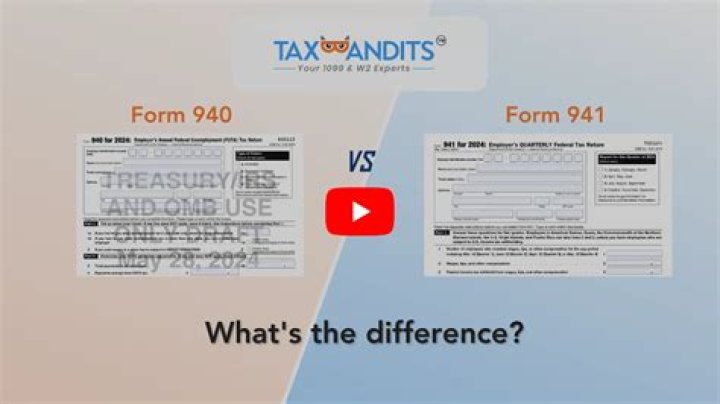
What is the difference between a 940 and a 941 form?
IRS form 940 is an annual form that needs to be filed by any business that has employees. IRS form 941 is the Employer’s Quarterly Federal Tax Returns. All employers are required to withhold federal taxes from their employees compensation, which includes, Federal Income tax, Social Security tax and Medicare tax.
Do I need to file 940 and 941?
Employers are also generally required to file Form 940 annually. Monthly or semiweekly deposits may be required for taxes reported on Form 941 (or Form 944), and quarterly deposits may be required for taxes reported on Form 940.
What is a 940 form used for?
Use Form 940 to report your annual Federal Unemployment Tax Act (FUTA) tax. Together with state unemployment tax systems, the FUTA tax provides funds for paying unemployment compensation to workers who have lost their jobs. Most employers pay both a federal and a state unemployment tax.
How do I know if I file a 941 or 944?
Most employers use Form 941 for reporting. Again, this is the form employers use to report wage and tax information quarterly. File Form 941 if you have employees and the IRS does not tell you to file Form 944. Send Form 941 to the IRS even if you don’t have taxes to report (simply enter 0 on the lines).
Who Must File 941?
You must file IRS Form 941 if you operate a business and have employees working for you. Certain employers whose annual payroll tax and withholding liabilities are less than $1,000, might get approval to file the annual version—Form 944.
Do sole proprietors file 941?
Sole proprietors need to file Form 941, Employer’s Quarterly Federal Tax Return (or Form 944, Employer’s Annual Federal Tax Return), for the calendar quarter in which they make final wage payments.
Do sole proprietors get stimulus check?
Independent contractors, sole proprietors and self-employed individuals can also apply. Although the borrowing cap for a PPP loan is $10 million, how much you can get depends on a calculation based on your payroll costs. Read more about the Paycheck Protection Program here.
What happens if you don’t file 941?
If you fail to File your Form 941 or Form 944 by the deadline: Your business will incur a penalty of 5% of the total tax amount due. You will continue to be charged an additional 5% each month the return is not submitted to the IRS up to 5 months.
Do sole proprietors pay federal tax?
Sole proprietors are responsible for paying: Federal income tax. State income tax, if this applies in your home state. Self-employment tax.