T
The Daily Insight

How did they build houses in the 1920s

Author

John Parsons

Published Feb 21, 2026

What were houses made of in the 1920s?

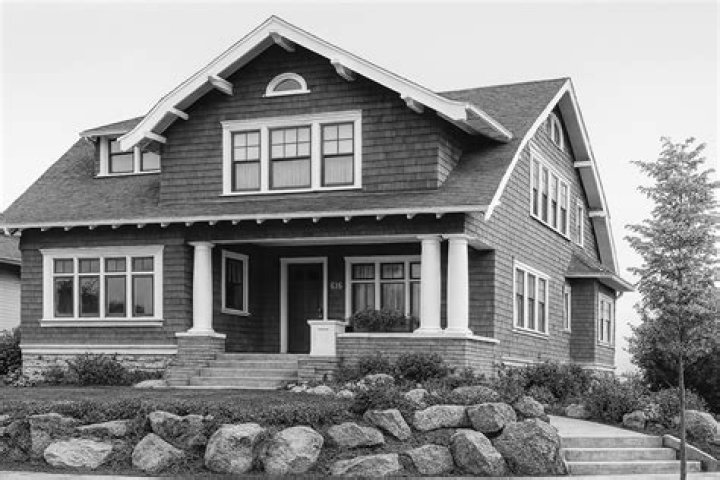
Some were wood-shingled, others had tiled roofs—and a startlingly large number of them were brand-new. The 1920s saw a historic housing boom, with modest residential homes springing up in styles of all kinds, thanks to new construction technologies.

What was construction like in 1920?

Apart from the Art Deco, dominant style in the 1920s architecture in the US were also Neo-Gothic, buildings that featured decorative finials, patterns, scalloping and moldings with heavily arched windows, Baux-Arts, a movement featuring Neo-classical French and Italian designs, and Prairie Style, a quintessential …

What style is a house built in the 1920s?

During the 1920s, the American-inspired Californian bungalow became the design of choice for homes, with Mediterranean and Spanish Mission influences also making themselves known. Art Deco also began to surface in Australian design, and continued to grow in popularity well into the future.

Is a house built in 1920 Old?

Several housing booms after about 1917 brought us comfortable houses that are decidedly not Craftsman Bungalows. Indeed, in much of the USA, an “old house” refers to one built in the 1920s or later. Some of these houses belong to an obvious genre—Colonial, Modernist, Tudor.

What did homes look like in the 1920s?

The typical house of the 1920s was smaller than those of previous decades. It had a front room off a hall, a second living room at the rear and a kitchen. … A new pattern was the bungalow with all its rooms on a single level, or the chalet-style bungalow with one or two bedrooms in the roof.

What did houses look like in the early 1900s?

Many homes featured built-in storage, with solid wood or glassed-in doors, including bookshelves, linen cupboards and kitchen cabinets. Windows were often large and squarish, providing plenty of natural light. Another common feature of early 1900s homes was a large, roofed porch across the full front of the house.

Are 100 year old houses safe?

Buying a 100-year-old house offers many benefits. However, sometimes it’s not all sunshine and rainbows when you discover a problem with the home — it could have electrical issues, foundations problems, and more. There’s absolutely nothing wrong with buying a 100-year-old home.

How were homes decorated in the 1920s?

1920s: the living room

Rich colours were used frequently in 1920s interior design; greens, reds, yellows, blues and purples would often be freely mixed. With the dawn of Art Deco, there was an appetite for modern fashion including exotic prints and patterns.


How did they build houses in 1900?

In the early 1900s, typical American homes still had fewer than 1,000 square feet but began to reflect changes in the industry. Construction varied depending on affordability, with choices of basic or upgraded homes. Builders began using concrete spread footings, or reinforced cement foundations, for building strength.

What were houses built of in 1900?

Most houses at the end of the Victorian period (1900) were built with suspended ground floors. There were exceptions to this. Many houses had ground floors constructed with stone or clay flags; basements too were covered with flags. These were laid on a bed of ashes or directly onto compacted earth.

What did houses look like in the 1910s?

Most homes in the 1910s had walls decorated with beadboard, wallpaper, or wood trim, while the floors were often tile or hardwood. Rich and deep colors were very common would have been painted on the walls, included in wallpaper, or incorporated in textiles. Art Deco was the next trend in interior design.

How did they build houses 100 years ago?

Houses built 100 years ago were built using “old growth” lumber. This means it was harder wood, denser wood, and stronger wood.

How did they build houses in the 1700s?

They had wooden frames which were filled in with sticks. The holes were then filled in with a sticky “daub” made from clay, mud, and grass. The roof was usually a thatched roof made from dried local grasses. The floors were often dirt floors and the windows were covered with paper.

How did they built houses in the 1800’s?

From the mid-1800s through about 1900, the industrial revolution and steam power also helped make masonry building materials cheaper and more readily available. As a result, more and more people could afford to own a brick or stone home. Historic masonry houses were constructed in two ways: Masonry.

What will houses be like in 100 years?

Personal homes will be almost fully independent of a dangerously overtaxed energy grid. One hundred years in the future, our houses will be, in almost all respects, semi-living, artificial organisms—closed systems with a metabolism, sensory apparatus, immune response, and an approximation to a nervous system.

What did houses look like in 1914?

In 1914 a typical working-class family lived in a ‘two up, two down‘. They had two rooms downstairs and two upstairs. … Most working-class homes had outside lavatories. From about 1900 some houses were built for skilled workers with bathrooms and inside toilets.

How were houses built in the past?

In the Middle Ages, ordinary people’s homes were usually made of wood. However in the late 16th and early 17th centuries, many were built or rebuilt in stone or brick. By the late 17th century even poor people usually lived in houses made of brick or stone. They were a big improvement over wooden houses.

What will houses be like in 2050?

More homes will be designed with flexible layouts to suit different generations, which can be adapted as families’ needs change. … By 2050, technology will transform homes into collectors and storers of energy, with electricity, now generated by non-fossil fuel, most likely to be used to heat homes and hot water.

What will homes look like in 2070?

SG: By 2070, most building materials will likely be grown or recycled from existing materials so homes will have a much more organic, biophilic design. Cities will be much denser to accommodate a dramatically larger population, so buildings (multi family homes) will be far taller than they are today.

Are smaller homes becoming more popular?

Over the past few years, we’ve noticed that smaller homes are becoming increasingly popular among homebuyers. … In 2019, only 20% of the homes we sold in total were 2,500 square feet or greater, and 93% of new construction homes were below that size threshold.

What will cars look like in 2050?

The 2050 car is a driverless vehicle in the shape of a smooth pod that can change colour with the tap of an app. By 2050, cars will be fully autonomous and electric, with advanced customisation technologies.

What will the UK be like in 2050?

By 2050, Met Office scientists think the climate could have warmed by 1.7°C under a high emissions scenario, and by 1.3°C if action is taken to reduce emissions. … The headline from the Met Office is that the UK is likely to experience more hot, dry summers and warmer, wetter winters.