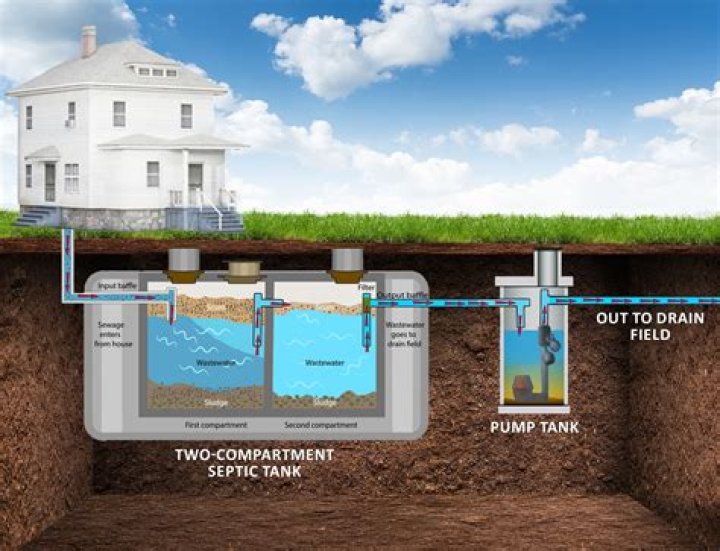
How do you build a septic tank drain field

Lily Fisher
Published Feb 18, 2026
How do you build a septic drain field?
How to Make a Leach Field- Locate your septic tank and uncover the distribution box. …
- Decide where to dig your trenches. …
- Clearly mark the trenches with spray paint. …
- Dig the trenches. …
- Lay straight perforated pipes in the trenches. …
- Cover the trenches with a layer of straw. …
- Plant grass over the top of the leach field.
How deep does a septic drain field need to be?
Septic drainfield trench depth specification:A typical septic drainfield trench is 18 to 30 inches in depth, with a maximum soil cover over the disposal field of 36″; or per the USDA, 2 feet to 5 feet in depth.
How is a septic field constructed?
Conventional SystemThe name refers to the construction of the drainfield. With this design, effluent is piped from the septic tank to a shallow underground trench of stone or gravel. A geofabric or similar material is then placed on top of the trench so sand, dirt, and other contaminants do not enter the clean stone.
How big of a leach field do I need?
The size of the drainfield is based on the number of bedrooms and soil characteristics, and is given as square feet. … For example, the minimum required for a three bedroom house with a mid range percolation rate of 25 minutes per inch is 750 square feet.How long should a septic drain field last?
It’s important to consider the life expectancy of a drain-field, too. Under normal conditions and good care, a leach-field will last for 50 years or more. Concrete septic tanks are sturdy and reliable but not indestructible.Can you put a garden over a septic field?
Gardening over septic tanks is not only permissible but also beneficial in some instances. Planting ornamental plants on septic drain fields provide an oxygen exchange and help with evaporation in the drain field area. Plants also help control erosion.How far should leach field be from house?
Local codes and regulations that stipulate the distance of the septic tank from the house vary depending on the locale, but the typical minimum distance is 10 feet.What can you put over a septic field?
Herbaceous plants, such as annuals, perennials, bulbs and ornamental grasses are generally the best choices for use on a septic drain field. Ornamental grasses also offer the advantages of having a fibrous root system that holds soil in place, and providing year-round cover.Can you plant trees in a septic drain field?
Avoid planting trees near your septic systemTrees are a strict no for planting around a septic system. The strong roots can extend deep enough in the search of moisture and nutrients and can quickly invade and block the pipes. Trees and even shrubs are not recommended to be planted over septic systems.
Can you plant vegetables over a septic drain field?
Planting over a septic leach field (drain field) is possible if it is done with care. If you have limited space on your property where you can garden, the leach field may be the only spot for landscaping. … Vegetable gardening over a leach field is not recommended.Is it safe to plant vegetables near a septic tank?
DON’T plant veggies near your septic tankFruits and vegetables should be planted at least three meters away from the drainage field of your septic tank to avoid bacterial contamination. This seems fairly simple, but it is also important to keep in mind as you plan out your planting!
What trees are bad for septic systems?
Elms (Ulmus sp.), gum trees (Eucalyptus sp.), cypress trees (Cupressus), maples, particularly silver maple (Acer saccharinium), birches (Betula sp.), walnut trees (Juglans), poplars (Populus sp.) and willows (Salix sp.) pose the greatest threat to septic tanks and sewage systems.How far from a leach field should a garden be?
Measure 10 feet from the outer perimeter of the leach field. Mark the garden’s borders with stakes. According to the University of California Small Farm Program, fruits and vegetables should be planted at least 10 feet from a septic system or leach field to avoid bacterial contamination.Can you put mulch over septic tank?
Gardens. Landscape fabric, plastic, bark, or mulch should not be used over your septic system. These materials reduce air exchange while bark and mulch also retain excess moisture. Adding more than a few inches of soil over the drainfield, such as for raised beds, limits air exchange and can lead to compaction.How far from a septic tank can you plant a tree?
You shouldn’t plant any trees or large shrubs within 10m of your septic tank or drainage field. The roots will instinctively grow towards your septic tank and drainage field which are abundant sources of water.How close to my septic tank can I plant a tree?
The general rule is that such a tree needs to be at least as many feet away from your septic drain field as it is tall. So a specimen 50 feet tall at maturity should stand at least 50 feet away.What can I plant around my septic tank?
Plants Safe to Grow Over Septic Tanks and Drain Fields- Dogwood trees.
- Japanese maple trees.
- Eastern redbud trees.
- Cherry trees.
- Azalea shrubs.
- Boxwood shrubs.
- Holly shrubs.
Can you build a patio over a septic tank?
Can I build a deck over a septic tank? Yes, you can do this as well. However, keep in mind that if you build a deck over a septic tank, you’ll need adequate space to access it and service it. You’ll also need space for ventilation.Can you put raised beds on septic field?
A raised garden can interfere with the functioning of a septic or drain field. Installing a raised garden bed over the leach lines is not recommended.Can I put a fire pit over my septic field?
A fire pit directly on the field increases the chances of melting the drain pipes underneath, but a fire pit that stands on legs would eliminate that and still allow you to make the most of your limited space.Why doesn’t grass grow over my septic tank?
Lawn grass species prefer moist, high pH soil, and direct sunlight. Growing grass over a septic tank can be challenging due to the acidic, low-pH soil resulting from sewage runoff into the leach field.How far is the leach field from the septic tank?
Common guidelines require at least 50′ clearance distance between a well and a septic system tank or 150′ between a well and a septic drainfield or leaching bed but you will see that different authorities may recommend different distances. Local soil and rock conditions can make these “rules of thumb” unreliable.Why is my grass dying over my drain field?
As temperatures increase, grass draws more moisture from the soil beneath it. The soil above leach lines is shallower than the soil in the rest of the lawn, so it holds less water compared to the rest of the lawn, causing grass directly above the lines to dry out and turn yellow.Can you build a garage over a septic field?
Building over septic tanksIt is never recommended to build a structure over any portion of your septic system. … No permanent structures should be built over any portion of the system, but at least in this case the homeowner can pump out their septic tank.