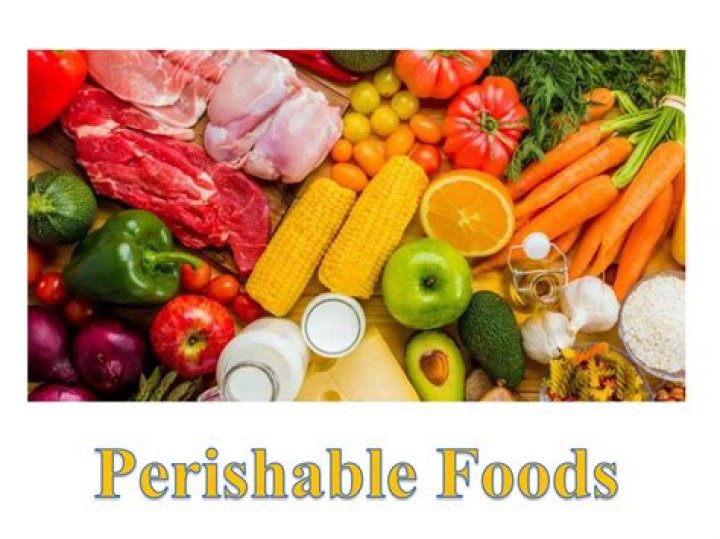
How should semi perishable foods be stored

Natalie Ross
Published Feb 13, 2026
How should perishable foods be stored?
Most perishable foods need to be stored in the refrigerator. (There are some fruits and veggies that should be stored at room temperature instead.) The temperature of your fridge should be between 32°F – 40°F. … Keep the fridge clean and evenly space the contents so air can move around easily.What is the best way to keep semi-perishable foods in their best?
Semi-perishable FoodsIf optimally stored and handled, like in a clean, vacuum-sealed bag, semi-perishable foods may remain unspoiled for six months to a year. Frozen, some can last even longer.
What are semi-perishable foods?
(ii) Semi-perishable foods: Can be kept for a couple of weeks or even a month or two. They have a longer shelf life than perishable foods. Potato, arbi, onions, ginger, biscuits and namkeens, are some examples of semi-perishable food.
How do you store non-perishable food?
Non-perishable foods, such as canned goods and dried fruit, have a long shelf life and don’t require refrigeration to keep them from spoiling. Instead, they can be stored at room temperature, such as in a pantry or cabinet (1).What are the methods of storing?
The 6 sections below look at various food preservation methods you can use and the safest, most effective way to do them.- Chilling.
- Freezing.
- Sugaring.
- Salting.
- Canning.
- Vacuum Packing.
How are perishable food stored on the commercial scale?
Perishable foods is stored in huge cooling units for the commercial purpose. these units maintains the temperature which prevents food items from spoilage.How do you store perishable and non perishable food?
Perishable foods can be stored using cold storage process like putting fresh food in the freezer, refrigerator or in an open environment. Non perishable foods are foods that can not spoil easily eg maize, beans, rice, dried fish & meat.What are the 3 types of food storage?
There are three types of food storage options: dry storage refers to the storing of items which don’t require a climate controlled environment; refrigerated storage is defined as foods that require storage at a cool temperature, but not a freezing temperature; and frozen food storage, which are foods that are required …What is the temperature of storing non perishable items?
Non-perishable foods can be stored indefinitely and do not require refrigeration or freezing, even when opened. Store at moderate room temperature(s) below 75° F. Ideal storage temperatures for maximum shelf life is below 75° F but above freezing.What is perishable and semi-perishable foods?
Perishable: Spoil quickly and should be refrigerated ASAP. … Semi-Perishable: Take longer to spoil and may or may not need immediate refrigeration. Semi-perishable foods include onions and potatoes. Non-Perishable: Will last for a while if stored properly, though they may lose quality over time.
Which of the following is an example of semi-perishable food?
Semi-perishable: Butter, margarine, cheese, eggs, some pickled foods and some fruit and veg. Non-perishable: Dried foods, nuts, grains, cereals, canned foods and frozen foods. Where and how long can you store Perishable foods?What are the correct storage temperatures for perishable foods?
Perishable non-frozen foods| Food storage temperature | °C | Shelf life in the home |
|---|---|---|
| Cured meat | 0-3 | 2-3 weeks |
| Poultry | 0-3 | 3 days |
| Fruit juices | 0-5 | 7-14 days |
| Milk | 1-5 | 5-7 days |
Why does perishable food go off quickly?
The environment inside a refrigerator usually creates an inhospitable environment for many bacteria. But some bacteria are able to grow at cold temperatures, these are called psychrophiles (Toule and Murphy, 1978). This explains why food products still go bad in refrigerators.What is perishable and non perishable food?
Perishable foods are those that spoil the most quickly and require refrigeration. Non-perishable foods, on the other hand, are those that will take a very, very long time to spoil and don’t require refrigeration. These are important distinctions to make.What do you mean by perishable and non perishable food?
Perishable can also be a noun—perishables are items, usually food, that need to be specially stored (like in a refrigerator) to make them last a while without spoiling, like meat and dairy products. Nonperishables, on the other hand, are things that will last a long time, like dried grains or canned foods.
How do you handle perishable goods?
Here are four excellent tips for handling perishable food:- Use the best quality food. First, you need to make sure you’re purchasing quality food and ingredients. …
- Follow storage instructions. …
- Keep the kitchen and food manufacturing area clean. …
- Always wash your hands.