Who is Drew Weissman, winner of Nobel Prize for medicine?

Samuel Coleman
Published Feb 06, 2026
Drew Weissman, Nobel laureate, changed immunization improvement with mRNA
His work sped up Coronavirus immunization creation
Weissman’s advancements reshaped medication
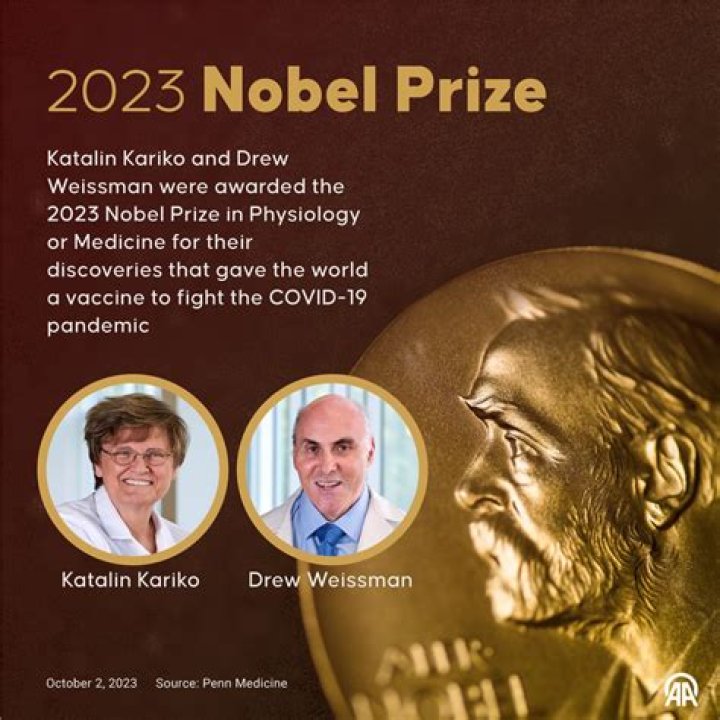
Drew Weissman, a trailblazer in mRNA innovation, shares the 2023 Nobel Prize in Physiology or Medication for reforming immunization improvement
Who is Drew Weissman?
Drew Weissman, a pioneer in the realm of mRNA innovation, has been granted the lofty 2023 Nobel Prize in Physiology or Medication for his earth shattering commitments that have reshaped the scene of immunization improvement. Weissman’s work, in a joint effort with Katalin Karikó, has not just sped up the production of Coronavirus immunizations however holds tremendous commitment for future clinical headways.
The Nobel Prize site suitably portrays their work as having “in a general sense changed how we might interpret how mRNA cooperates with our resistant framework.” This groundbreaking exploration assumed an essential part in the fast improvement of immunizations during one of the main wellbeing emergencies in ongoing history.
✡️ Just in: Jewish-American scientist Drew Weissman who contributed heavily to the development of effective COVID mRNA vaccines, won the Nobel Peace Prize.🏆
— Terror Alarm (@Terror_Alarm) October 2, 2023
Generally, immunizations depended on bringing debilitated or inactivated infections into the body to invigorate an insusceptible reaction. In any case, this technique required broad cell culture and tedious cycles. At the point when Coronavirus arose as a deadly and quickly spreading danger, time turned into an important item.
This is where mRNA innovation, an idea tracing all the way back to the 1980s yet beforehand unsatisfactory for huge scope immunization creation, stepped in. Rather than bringing an infection into the body, mRNA immunizations use courier Ribonucleic Corrosive (mRNA) to convey guidelines to the safe framework. Hereditarily designed mRNA educates cells to deliver explicit proteins expected to battle a specific infection, wiping out the requirement for cell culture.
Weissman and Karikó’s essential acknowledgment was that the body’s dendritic cells perceived these hereditarily designed mRNAs as unfamiliar substances, prompting a fiery reaction. To resolve this issue, they presented substance modifications in the mRNA bases, bringing about a huge decrease in provocative responses. These earth shattering discoveries, distributed in 2005, set up for the improvement of mRNA immunizations.
Moderna and Pfizer’s Coronavirus immunizations, both using this mRNA innovation, arose as leaders in the race for a successful arrangement. Weissman and Karikó’s commitment and creative soul prepared for these antibodies that have saved innumerable lives around the world.
Prior to getting the Nobel Prize, Drew Weissman, born in 1959 in Lexington, Massachusetts, sought after broad scholar and exploration tries, coming full circle in his foundation as the Roberts Family Teacher in Immunization Exploration and Overseer of the Penn Establishment for RNA Advancements at the Perelman Institute of Medication, College of Pennsylvania.
Weissman’s commitments to science and medication will keep on reverberating, highlighting the significant effect of mRNA innovation on immunization improvement and offering expect handling future wellbeing challenges.